Coordinating export logistics and documentation for shipments from Thailand
WHY IT STARTS HERE
Import Logistics as an Operational Phase
This phase is one of the most common breakdown points in international trade.
Delays, incomplete documentation, misaligned Incoterms, or weak coordination between suppliers, forwarders, and brokers can quickly create unnecessary cost and disruption.
Effective logistics is not simply about selecting a carrier — it requires managing information, timing, and responsibilities across all involved parties.
OUR PROCESS
Logistics Coordination Process
Shipment Planning
We align shipment terms, timelines, and responsibilities before goods depart the factory.
Documentation Coordination
We coordinate invoices, packing lists, transport documents, and supporting paperwork across all involved parties.
Delivery Oversight
We monitor shipment progress and coordinate responses when delays or issues arise.
Coordination Components
Shipment planning and execution coordination
Incoterms and responsibility clarification
Documentation flow management
Coordination with forwarders and brokers
Delivery timeline monitoring
THAI SOURCING INSIGHTS
Shipping From Thailand: Operational Realities
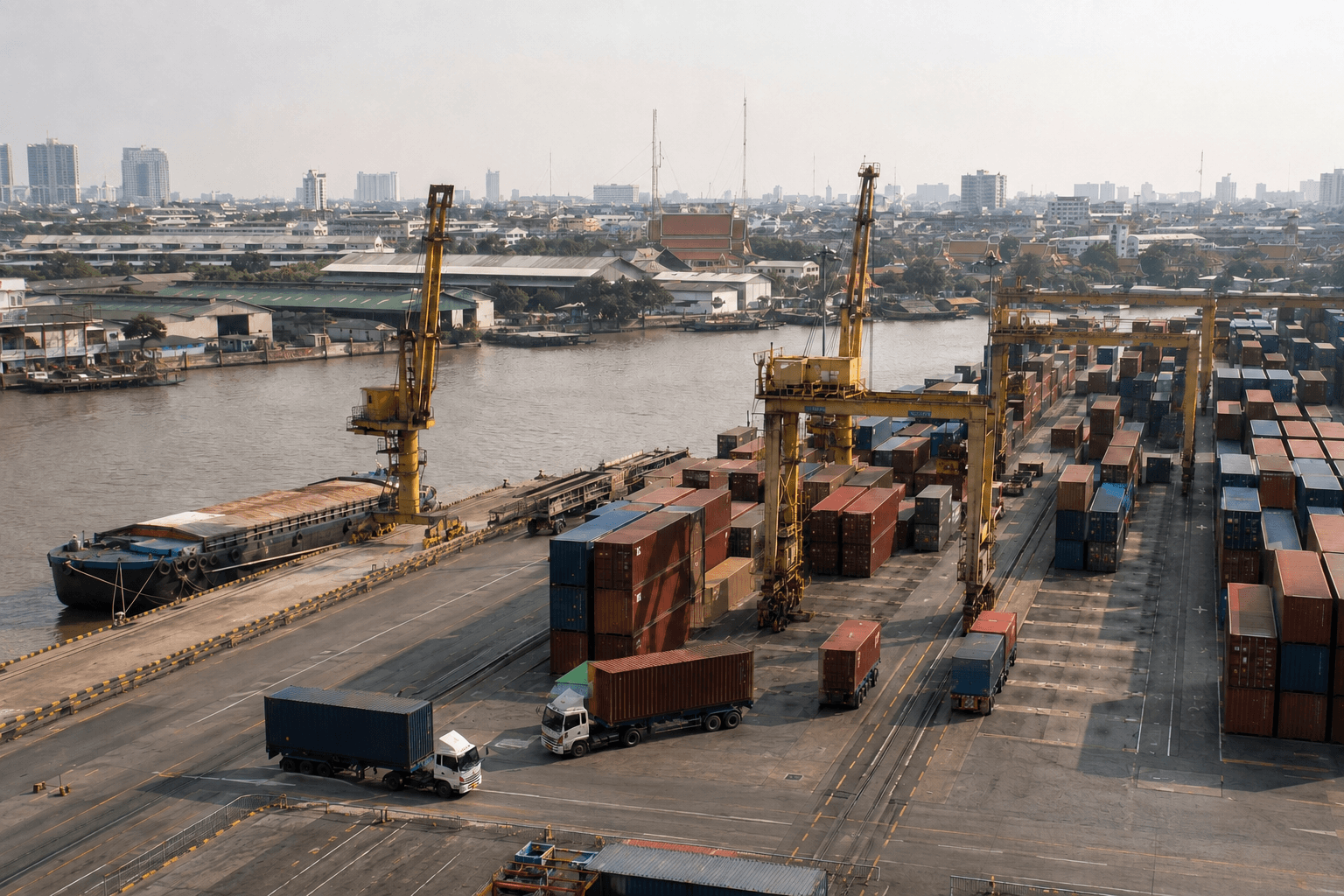
Thailand’s export system is built around Laem Chabang Port on the Eastern Seaboard, supported by industrial production in the EEC (Chonburi, Rayong, Chachoengsao). The most common shipment failures are not “slow ships” — they happen earlier, when pickup timing, port cutoffs, and documentation readiness are misaligned.
Gateways & Operational Impact
Thailand’s main deep-sea container gateway is Laem Chabang Port, with multiple container terminals and 24/7 port operations managed under the Port Authority of Thailand framework.
Operationally, your origin plan is governed by terminal cutoffs (cargo gate-in and documentation deadlines). Missing a cutoff can trigger a rollover to the next sailing even when the vessel route is normal — which is why export success depends on pre-port execution (booking, pickup, stuffing, paperwork), not just “transit time.”
Transit Time Ranges
For planning, typical benchmarks used by forwarders are: sea freight 25–50 days depending on route/season and network congestion; air freight 7–14 days when you include handling and customs steps, not just flight time.
The key discipline is separating port-to-port from door-to-door: most “surprises” live in the buffers (pickup scheduling, export clearance, terminal handling, transshipment, and destination clearance), not on the ocean leg.
Incoterm Selection
Incoterms define responsibilities across shipment management, insurance, documentation, customs clearance, and risk transfer—so choosing the wrong term creates delays and cost disputes.
In practice: EXW / FCA / FOB determine who controls pickup and export-side execution; CIF/CIP shift carriage/insurance arrangements; DAP/DDP push delivery obligations closer to the destination side.
Locking the Incoterm early prevents “split responsibility” issues where nobody owns the critical path.